 BooksCurated
Finding the reading guides
21 August 2026
Fantasy has a length problem, or a length feature, depending on who you ask. These ten all ask for a real commitment, some of them a genuinely large one, so each entry comes with an honest note on where the slow parts are and whether the payoff justifies them.
(Quick note before the list: a few links below are affiliate links, at no cost to you beyond what you'd pay anyway.)
Brandon Sanderson
The better Sanderson starting point than his longer series, structured like a heist novel with a magic system explained clearly from chapter one instead of revealed piecemeal over a thousand pages. If you're newer to epic fantasy, start here before his bigger commitments.
 ₹₹₹ Premium#2
Brandon Sanderson
Over a thousand pages and the slowest opening of anything on this list, worth saying plainly. What justifies it: Sanderson's "hard magic system," rules the reader can actually learn and predict rather than vague, undefined power, which is exactly why fantasy readers rate him as highly as they do. Budget real time before starting.
 ₹₹ Mid-range#3
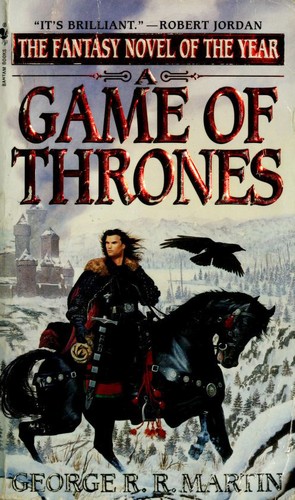
George R.R. Martin
The book most people know secondhand through the show. The honest case for reading it anyway: the slower pace and deeper political detail reward patience the adaptation didn't have time for, especially the internal reasoning of characters the show simplified into pure plot function.
 ₹₹ Mid-range#4
J.R.R. Tolkien
The foundational text the entire genre still borrows its structure from. Honest caveat: the first hundred pages in the Shire are genuinely slower than modern fantasy pacing, and if it takes a while to hook you, that's not you reading it wrong, that's just 1954 pacing.
 ₹₹ Mid-range#5
Patrick Rothfuss
Framed as an older man recounting his own life story to a scribe, which gives the prose an unusually literary quality for the genre. Worth knowing before you fall for it: the promised third book in the trilogy still hasn't arrived over a decade later, so go in accepting this one and its sequel as the whole experience for now.
 ₹₹ Mid-range#6
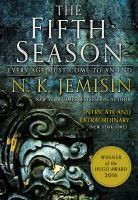
N.K. Jemisin
Told across three interwoven timelines, one narrated in an unusual second-person voice, a structural choice that feels disorienting for the first fifty pages and then pays off in a reveal that recontextualizes everything you've read. Worth trusting the structure even when it feels strange early on.
 ₹₹ Mid-range#7
Robin Hobb
Slower and more interior than most epic fantasy, told entirely in first person, closer to a coming-of-age novel wearing a fantasy setting than a war epic. A good pick if you want character depth more than battles and politics.
 ₹₹ Mid-range#8
R.F. Kuang
Starts as a fairly conventional magic-school story, then deliberately swerves into much darker, historically grounded war territory around the midpoint. That genre shift genuinely upsets readers who expected the first act's tone to hold through the whole book, worth knowing going in so it reads as intentional, not a betrayal.
 ₹₹₹ Premium#9
Susanna Clarke
Written with extensive fictional footnotes, as if it's a real nineteenth-century history book about magic. A structural choice that either delights you or exhausts you, and it's fair to figure out which type of reader you are before committing to over a thousand pages of them.
 ₹₹ Mid-range#10
Scott Lynch
A con-artist heist novel dropped into a fantasy city, alternating between the heist currently in progress and flashbacks to the crew's training. Faster paced than everything else on this list, a good closer if the other nine started to feel like homework.
If the length is what's stopping you, start with Mistborn or Lies of Locke Lamora, both move fast enough to prove the genre doesn't always ask for a thousand pages before it pays off.
A thousand-page commitment makes sense some months and not others — the quiz below factors in how much time you're actually working with before it picks something.
Not sure what to read next?
Take the 2-minute quiz