 BooksCurated
Finding the reading guides
1 August 2026
Opening a demat account takes about ten minutes on your phone. Understanding what you're actually doing once money is in it takes a lot longer, and most people skip that part entirely and learn through a bad month instead.
These ten won't make you an expert by Friday, but they'll stop you from making the mistakes that cost the most: panic-selling, chasing tips, and confusing activity with progress.
(Affiliate disclosure: a few of the book links below earn us a small commission if you buy — doesn't add anything to what you pay.)
 ₹₹ Mid-range#1
Benjamin Graham
Try applying Graham's actual test to whatever you're about to buy next: an investment, by his definition, is an operation that promises safety of principal and a reasonable return only after thorough analysis. Everything else, however exciting, he calls speculation. Most of what shows up on finance social media fails that test in the first ten seconds, which is closer to Graham's point than a compliment.
 ₹₹₹ Premium#2
Burton G. Malkiel
Malkiel's core claim, backed by decades of data: a blindfolded monkey throwing darts at a stock listing does about as well, over the long run, as most professionally picked portfolios after fees. It's the single strongest argument for boring index investing you'll read, from someone who isn't selling you an index fund.
 ₹₹ Mid-range#3
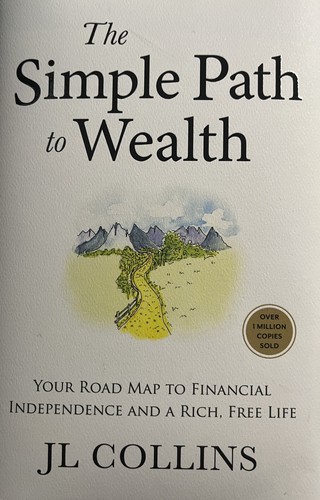
JL Collins
The concept worth internalizing before your first paycheck disappears into lifestyle creep: what Collins calls "F-you money," savings large enough that you never again have to stay in a job, a city, or a relationship purely because you can't afford to leave. He argues it changes your leverage in every negotiation long before you ever actually use it.
 ₹ Budget#4
Morgan Housel
The idea that reframes an entire investing career: a small handful of decisions or holdings usually account for almost all of your results, and everything else is close to noise. The goal isn't to be right constantly, Housel argues, it's to stay in the game long enough to still be there for the few moments that end up mattering.
 ₹ Budget#5
Napoleon Hill
The genuinely useful chapter, once you get past the dated language elsewhere: write down a specific, dated, written goal for what you want financially, not a vague wish. Hill's research, however dressed up, keeps landing on the same point every modern goal-setting book repeats, specificity changes follow-through.
 ₹₹₹ Premium#6
Scott Pape
Written for Australia, but the bucket system translates directly: split income into a "blow" account for daily spending, a "mojo" account for emergencies, and separate "grow" and "smile" accounts for long-term investing and fun goals, so you're never deciding in the moment whether a rupee is for spending or investing.
 ₹₹₹ Premium#7
Scott Trench
The one number worth calculating before you invest a rupee: your "runway", how many months you could survive on savings alone if your income stopped tomorrow. Trench's argument is that building that number to at least six months matters more than chasing returns, because it's what lets you take investing risk without panicking.
 ₹₹ Mid-range#8
Dave Ramsey
Ramsey's "debt snowball": pay off your smallest debt first regardless of interest rate, then roll that payment into the next smallest. Mathematically it's not optimal, the highest-interest-first method saves more money on paper, but Ramsey's point, backed by his own data, is that the small early wins keep people going long enough to finish, which the "optimal" method often doesn't.
 ₹ Budget#9
Robert Kiyosaki
The pattern worth watching for in your own bank statement: Kiyosaki's "rat race," where a raise quietly gets absorbed by a slightly bigger flat or a slightly nicer car within a few months, leaving you no further ahead than before the raise. His fix isn't complicated, notice the pattern before you sign the next lease, but almost nobody does it without being told to look.
 ₹₹ Mid-range#10
Tony Robbins
The fee math worth running on your own mutual fund statement: a 2% annual fee sounds small, but compounded over 30 years it can eat away more than half of your total returns compared to a fund charging a fraction of a percent. Robbins' book is mostly interviews with billionaire investors, but that one spreadsheet exercise is worth the read on its own.
If you only read one before opening that demat account, make it the Housel. Everything else is tactics; that one is the mindset the tactics depend on.
If ten is still too many to choose from, the quiz below narrows it to one, based on how you actually read rather than how the internet ranks these.
Not sure what to read next?
Take the 2-minute quiz