 BooksCurated
Finding the reading guides
10 August 2026
Every office Secret Santa has at least one of these wrapped up somewhere in the pile. Some of them earn the reputation. A few coast on it. Here's an honest pass at which is which.
(As always: a few links in this post are affiliate links, at no extra cost to you if you use one.)
 ₹₹ Mid-range#1
James Clear
The most-gifted book on this entire list, by a wide margin, and one of the rare cases where the hype is actually earned. The honest critique: the core insight, that identity change beats willpower, is fully delivered in the first fifty pages, and the rest is worked examples of the same idea restated. Give it anyway. Most people never finish the fifty pages on their own.
 ₹ Budget#2
Robert Kiyosaki
Gifted constantly, understood selectively. The specific idea that holds up: watch for the "rat race," where a raise quietly gets absorbed by a bigger flat or a nicer car within months, leaving you no further ahead. The part that hasn't aged as well is the real-estate-as-easy-wealth framing, worth reading with more skepticism in an Indian metro than the book was written for.
 ₹₹ Mid-range#3
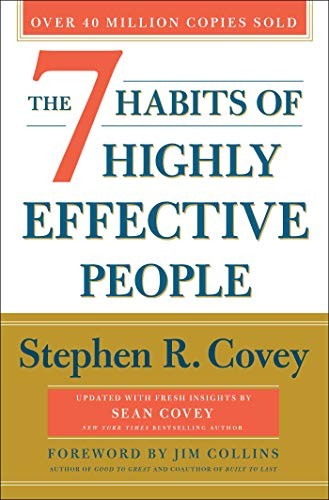
Stephen R. Covey
The most quoted, least finished book in this list. Habit 5, "seek first to understand, then to be understood," gets repeated in every workplace training deck ever made; Habit 7, "sharpen the saw," about deliberately maintaining your own energy and skills, gets skipped almost as often. Read the whole thing once, then keep habit 5 and habit 7 on a sticky note and let the rest go.
 ₹ Budget#4
Napoleon Hill
The book most likely to get an eye-roll for its "thoughts become things" chapters, and honestly, fair. What survives that dated framing is the chapter on persistence: Hill's specific claim that most people quit at the exact moment right before a breakthrough, because there's no visible sign one is coming. Skip the mysticism, keep that one chapter.
 ₹₹ Mid-range#5
Daniel Pink
Pink's case, that autonomy, mastery, and purpose beat cash bonuses for motivation, is well supported for creative and knowledge work. The gap the book glosses over: it applies a lot less cleanly to hourly or highly repetitive roles, where Pink's own cited research shows financial incentives still move the needle. Read it as a book about knowledge workers specifically, not workers in general, and it holds up fine.
 ₹₹₹ Premium#6
Ray Dalio
The idea worth extracting: "pain plus reflection equals progress," Dalio's case that the discomfort of a mistake is only useful once you've actually sat down and written out what caused it. The part worth knowing before you gift it: Dalio's own company became a case study in how "radical transparency" can curdle into something closer to surveillance culture when applied without his exact context. Read the principles, question the culture that produced them.
 ₹₹ Mid-range#7
Jocko Willink
The mechanism worth keeping: "decentralized command," pushing decisions down to whoever is closest to the problem instead of routing everything up the chain and back. The honest caveat: the military framing, SEAL missions mapped onto quarterly reports, wears thin fast for readers who find it more theatrical than instructive. The underlying management idea is solid even if you skim past the war stories to get to it.
 ₹₹₹ Premium#8
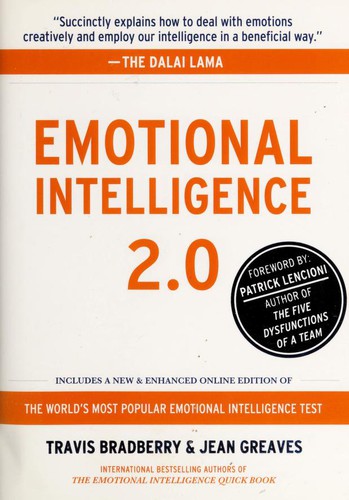
Travis Bradberry
Less a book, more a workbook, and that's actually its strength. The strategy worth using immediately: when a strong emotion hits mid-conversation, silently name it precisely, not "I'm upset" but specifically "this is defensiveness," which research cited in the book suggests measurably loosens its grip within seconds. Thin on narrative, genuinely useful on technique.
 ₹₹₹ Premium#9
John C. Maxwell
The most re-packaged idea in business publishing, and this is a reasonably clean version of it. The "Law of the Lid," worth knowing even if you read nothing else: your leadership ability sets a ceiling on your entire organization's effectiveness, so investing in yourself as a leader raises the ceiling for everyone under you. Twenty of the other twenty laws could've been an appendix.
 ₹₹₹ Premium#10
Patrick Lencioni
The least famous name on this list and arguably the most useful for an actual team. Lencioni's specific claim: organizational health, not strategy or finance, is the biggest competitive advantage most companies leave on the table, because it's harder to measure than a spreadsheet and gets deprioritized as a result. Underrated as a gift, mostly because it doesn't have a viral one-liner to put on a mug.
If you're only gifting one: Atomic Habits earns it. If you want to actually be remembered for the gift, The Advantage is the one nobody else in the exchange will bring.
If you'd rather not gift whatever's trending in the aisle this month, the quiz below asks a few questions about the actual person first.
Not sure what to read next?
Take the 2-minute quiz